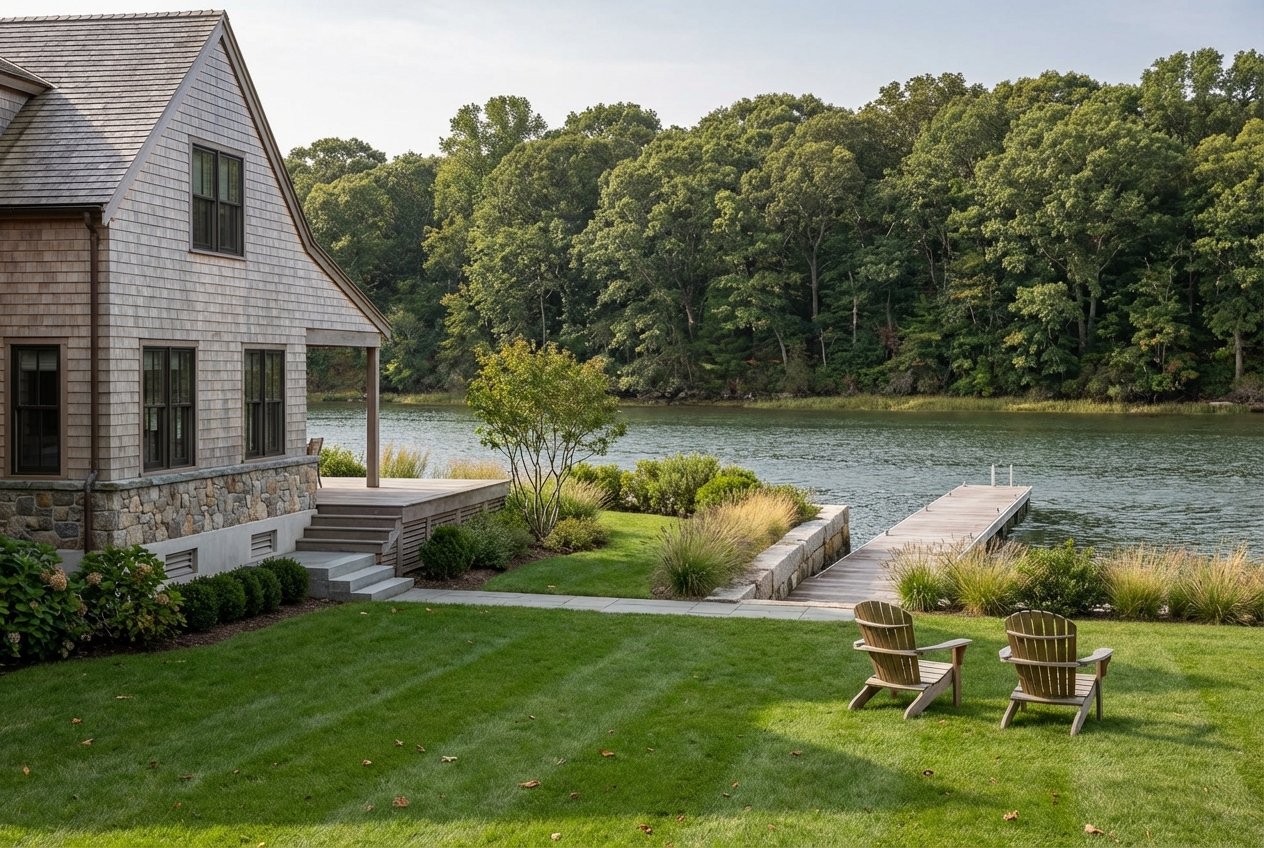
Are you picturing coffee on a deck with Long Island Sound views or more space and a bigger yard inland? In New London County, both paths can work well, but they carry different price points, risks, and day-to-day tradeoffs. You want clear answers on costs, flood insurance, commute realities, and long-term value. This guide breaks it down so you can choose with confidence. Let’s dive in.
Market snapshot: what you pay today
New London County sits in a mid-priced range for Connecticut, with steady appreciation and tighter inventory in recent years. Recent market snapshots show a county median sale price in roughly the mid to upper $300,000s, while median list prices have trended somewhat higher. That gap reflects limited supply and strong demand.
Coastal towns with beach access or water views usually sit above the county median. Old Lyme and Lyme often show medians above $600,000 and higher, and enclaves with unobstructed water access can run well above town medians. By contrast, New London, Norwich, and several inland areas of Montville or Colchester cluster below the county median, which is why many buyers look inland for value.
The waterfront premium explained
Academic research for New England finds a strong price boost from coastal amenities. Studies show unobstructed ocean views can raise prices by tens of percent, with estimates of about 33 to 69 percent after controlling for other factors. You can read more about this coastal amenity effect in a recent Land Economics paper on New England waterfront pricing that quantifies view premiums.
At the same time, flood-zone designations can apply a discount in many mortgaged purchases, largely due to mandatory flood insurance. A recent Connecticut-focused study found an average discount on the order of about 10 to 15 thousand dollars for transactions with a loan, though results vary across properties and buyers. See a Connecticut-specific analysis of flood-zone pricing differences in the academic literature for a balanced view of these effects.
The takeaway: waterfront value is a balance. Amenity premiums often outweigh straightforward flood-zone discounts, but insurance costs and risk still matter for your budget and long-term returns.
Flood zones and insurance 101
If you seriously consider a near-water or shoreline home, get familiar with FEMA flood zones. These zones shape mortgage requirements, elevate or reduce insurance costs, and may dictate how a house must be built or improved.
- Zone A or AE indicates a 1 percent annual chance flood area, commonly associated with rivers and inland floodplains.
- Zone V or VE indicates a coastal high-velocity wave action area, which usually faces stricter building standards and higher insurance tiers.
- Zone X is generally considered lower risk.
Start by looking up any address on FEMA’s Flood Map Service Center, then confirm details with the town’s floodplain administrator. FEMA provides a plain-language overview to help you know your flood risk and read the maps.
Flood insurance basics and limits
Flood coverage works differently from standard homeowners policies and is often required by lenders in A, AE, V, or VE zones. The National Flood Insurance Program has widely cited coverage caps of up to 250,000 dollars for building coverage and up to 100,000 dollars for contents on standard single-family policies. Many higher-value shoreline homes exceed those caps, so buyers often explore private flood options or excess coverage to fill gaps. Premiums depend on zone, elevation relative to the Base Flood Elevation, building age, and mitigation such as elevated foundations or engineered flood openings. The Flood Science Center offers a practical overview of coverage, limits, and key factors that drive pricing.
Community-wide discounts you might not expect
Some Connecticut towns participate in FEMA’s Community Rating System. When a town joins CRS and completes specific mitigation and outreach work, every NFIP policy in that town may receive a discount based on the town’s CRS class. Ask the town or check FEMA’s Community Status Book for CRS participation. Over years of ownership, a community discount can meaningfully reduce carrying costs.
Lifestyle and daily living tradeoffs
Access and commute
Waterfront pockets like Old Lyme, Niantic in East Lyme, Stonington or Mystic, and areas of Groton can be minutes from marinas, beaches, and coastal employers. If you work in Groton or New London, coastal neighborhoods can shorten your commute and keep daily life close to the water.
Inland, you will often trade commute time for a lower purchase price and more land. Towns like Colchester, Lebanon, or inland parts of Montville can offer bigger yards and quieter roads for less money, though you may add drive time on I‑95, Route 2, Route 12, or local corridors. Always test-drive your likely route during your actual commute window before you commit.
Local employment also shapes demand. Growth tied to defense and industrial hiring around Groton has added pressure to housing supply, especially near employer hubs, which can push some buyers inland. For context, see regional reporting on Electric Boat-driven demand and how hiring has tightened the local housing market.
Seasons and short-term rentals
Coastal New London County comes alive in summer. Mystic’s historic village and aquarium draw visitors, and the casino resorts add to the region’s destination pull. That seasonal energy brings higher summer traffic and stronger short-term rental demand in some neighborhoods. For a sense of the visitor economy, review the scale of Foxwoods Resort Casino as a regional draw.
If you plan to offset costs with short-term rentals, pause and verify local rules first. Town ordinances vary on night-by-night rentals, registration, and occupancy limits. Seasonal income can be lumpy, cleaning and turnover are higher, and your homeowners or flood policy may exclude rental-related losses. Ask for local code details and run conservative income assumptions for your exact street, not just town averages.
Maintenance, resilience, and long-term thinking
Waterfront living delivers daily joy, but ownership costs can be higher and more frequent. Shoreline maintenance, erosion control, dock upkeep, and wind-driven wear add to your annual budget. After major storms, repair windows can lengthen due to contractor demand and permitting.
Plan with a long horizon in mind. Connecticut’s leading climate researchers suggest planning for up to about 20 inches of sea-level rise by 2050 along parts of the coast. Even modest rise can change the frequency of nuisance tidal flooding and the odds of damaging events. Explore the University of Connecticut’s CIRCA resources to understand Connecticut’s sea-level planning benchmarks and tools.
Local mitigation and community projects
Communities across Long Island Sound invest in shoreline resilience. From living shorelines to upgraded drainage and elevation projects, town-level efforts can strengthen neighborhood staying power and influence long-run value. For a view into regional adaptation resources and case studies, browse the Long Island Sound inventory of resilience tools and examples. Ask each town’s planning or engineering office about projects that affect your target streets.
Comparing total cost of ownership
Think beyond the purchase price. Your all-in monthly and yearly cost will respond to where you buy and what you own.
- Purchase price premium. Academic estimates suggest unobstructed ocean views can add about 33 to 69 percent. If a comparable inland home is 400,000 dollars, a direct waterfront with a clean view could transact around roughly 532,000 to 676,000 dollars before adjusting for home specifics. The exact premium depends on the micro-location, elevation, and the home itself.
- Flood insurance and homeowners insurance. NFIP caps of 250,000 dollars for building and 100,000 dollars for contents mean many waterfront homes need private or excess coverage. Premiums vary by zone, elevation, and age, so always obtain written quotes early.
- Property taxes and maintenance. Shoreline properties can have higher assessed values, plus incremental costs for seawalls, erosion control, dock repairs, and wind-resistant features. Routine exterior upkeep can cost more near salt air.
- Commute time and transportation. Inland homes may add time and fuel but reduce monthly payments. Price your commute in both time and dollars.
- Rental potential. Near-water homes often see stronger summer demand, but local rules, seasonality, and insurance exclusions can limit upside. Never rely on town-wide averages to forecast revenue.
When you compare two finalist properties, put real numbers to each line item. Annualize flood and homeowners insurance, estimate maintenance, and include taxes. Then decide how much you value daily water access and views relative to added carrying costs and risk.
Which buyer are you? A simple framework
- Lifestyle-first. You want daily views, paddleboard mornings, and easy marina access. You accept higher purchase price and insurance, and you plan mitigation to manage long-term risk.
- Value-first. You prioritize price, land, a garage, and room to grow. You want a lower mortgage and simpler maintenance, with flexible access to the shoreline for weekends.
- Hybrid. You aim for near-water living without direct exposure. You look for elevated sites above the Base Flood Elevation, homes outside the V zone, or inland properties near rivers and lakes with improved resilience features.
None of these is right or wrong. The best fit depends on your budget, risk tolerance, and how you want to live day to day.
Buyer checklist for New London County
Use this list to compare waterfront and inland options with clarity.
- Confirm the flood zone. Look up the address on FEMA’s Flood Map Service Center and ask the town’s floodplain administrator to explain any recent map updates or Letters of Map Change. Start here: FEMA’s know-your-risk page.
- Get written insurance quotes. Request NFIP and private flood quotes using actual property details and elevation data. Ask whether an Elevation Certificate exists and whether the structure is pre-FIRM or post-FIRM, which can affect pricing. Review this flood insurance overview and limits.
- Ask about community discounts. Check if the town participates in FEMA’s CRS and what class it holds. Community participation may lower NFIP premiums. Verify via the Community Status Book.
- Review history and maintenance. Request any known flood history and insurance claims. Budget for shoreline or dock upkeep, erosion control, and wind-related wear. Ask local contractors about typical repair cycles.
- Validate rental assumptions. Confirm short-term rental rules with the town zoning office, then price realistic occupancy and rates for your exact neighborhood. Check your policy for rental income coverage.
- Test commute and daily routes. Drive your likely commute at peak times. Consider school, grocery, and health care travel times as part of your quality-of-life test.
- Think long-term resilience. Explore Connecticut’s sea-level scenarios and local resilience projects so you can plan for the home’s lifespan. CIRCA’s fact sheets are a strong starting point: Connecticut climate and sea-level planning. You can also scan regional resilience resources for examples of neighborhood projects.
How we help you compare options
You deserve a clear, local view of both paths. With deep experience across Eastern Connecticut, we help you price the waterfront premium at the neighborhood level, check flood and insurance details early, and weigh commute, rental potential, and long-term resilience without stress. We coordinate quotes, inspections, and local contacts so you can make a confident decision and move quickly when the right place hits the market.
If you are ready to compare properties or want a quick read on a specific address, reach out. You will get fast, direct guidance tailored to your budget, goals, and timeline. Connect with Skyla Gagnon to start a focused plan today.
FAQs
What is the typical price gap between waterfront and inland homes in New London County?
- Academic research for New England finds unobstructed ocean views can add about 33 to 69 percent to sale prices, while county medians show inland options often below the overall median and coastal towns above it. Your actual gap will depend on the street, elevation, and home features.
How do FEMA flood zones affect my mortgage and insurance for a coastal Connecticut home?
- If a home is in zones A, AE, V, or VE, a federally backed mortgage will generally require flood insurance, and building standards may be stricter. Verify any address on FEMA’s know-your-risk page and talk to the town’s floodplain administrator.
What are the NFIP flood insurance coverage limits for single-family homes?
- Standard NFIP policies commonly cite up to 250,000 dollars in building coverage and up to 100,000 dollars in contents coverage. Higher-value homes may need private or excess flood coverage to close gaps. See this overview of limits and pricing factors.
Do New London County towns offer discounts on flood insurance?
- Some towns participate in FEMA’s Community Rating System, which can provide community-wide NFIP premium discounts based on the town’s CRS class. Check the town or verify through the Community Status Book.
How should I factor sea-level rise into long-term value for a shoreline home?
- Connecticut planning guidance suggests up to about 20 inches of sea-level rise by 2050 in parts of the coast, which can increase tidal flooding frequency and risk. Review CIRCA’s Connecticut climate fact sheets and prioritize elevation, mitigation, and local resilience projects in your decision.
Can summer rentals reliably offset the higher carrying costs of a waterfront home?
- It depends on your town’s short-term rental rules, your specific street’s demand, and insurance coverage. Seasonal income can be strong near attractions like Mystic and the casinos, but it is variable and costlier to manage. Confirm ordinances and run conservative projections before you buy.