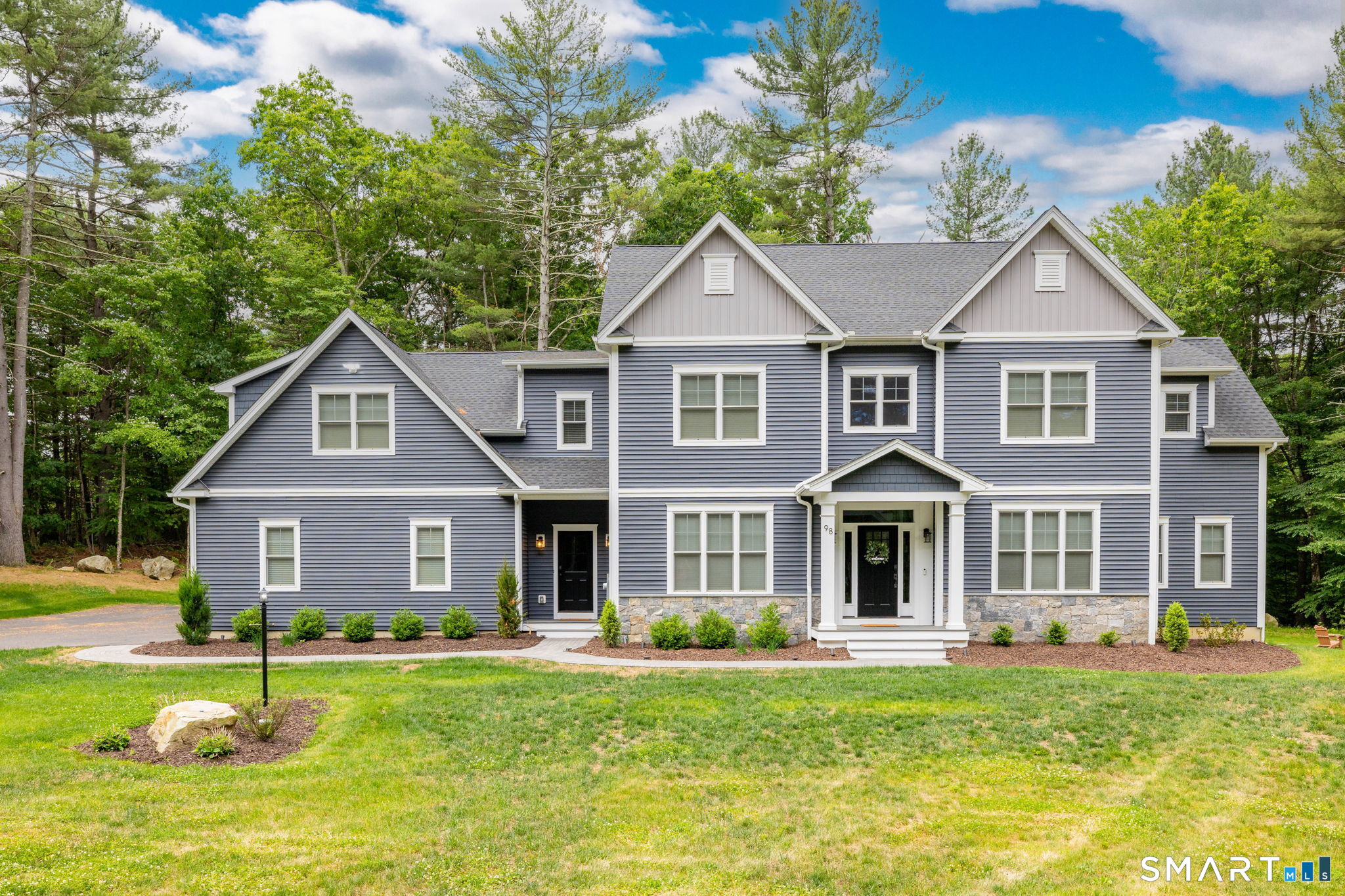
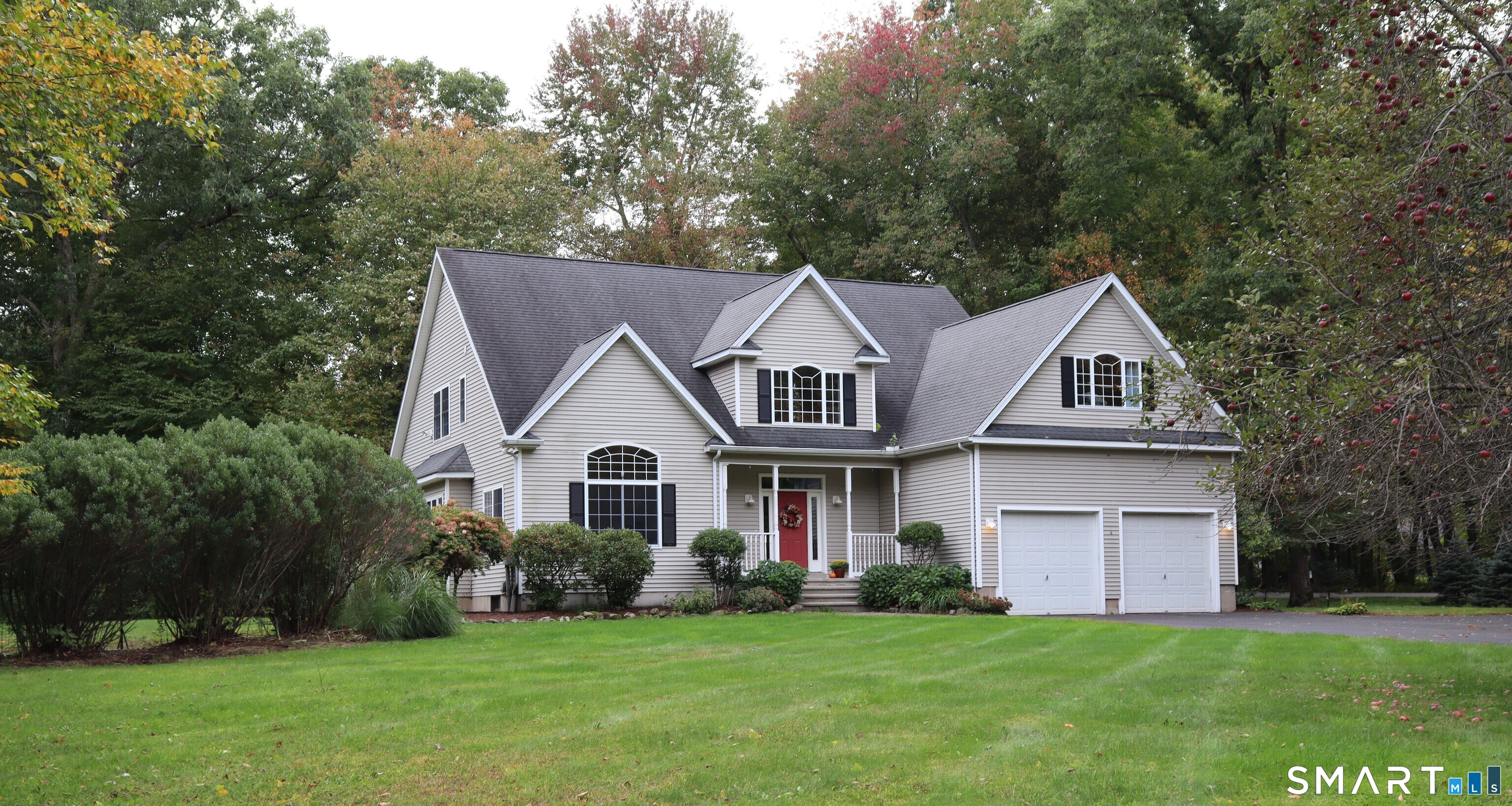
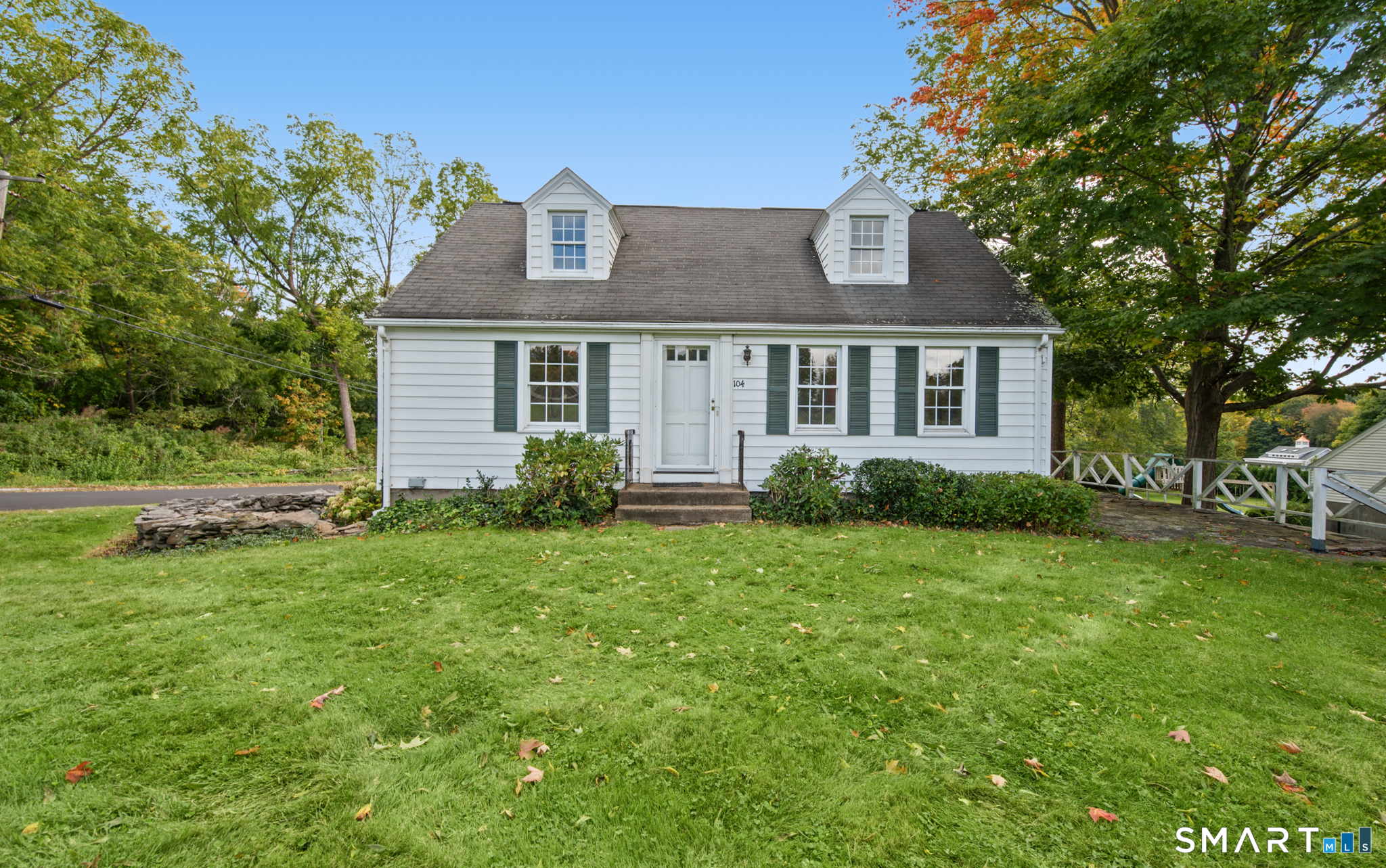
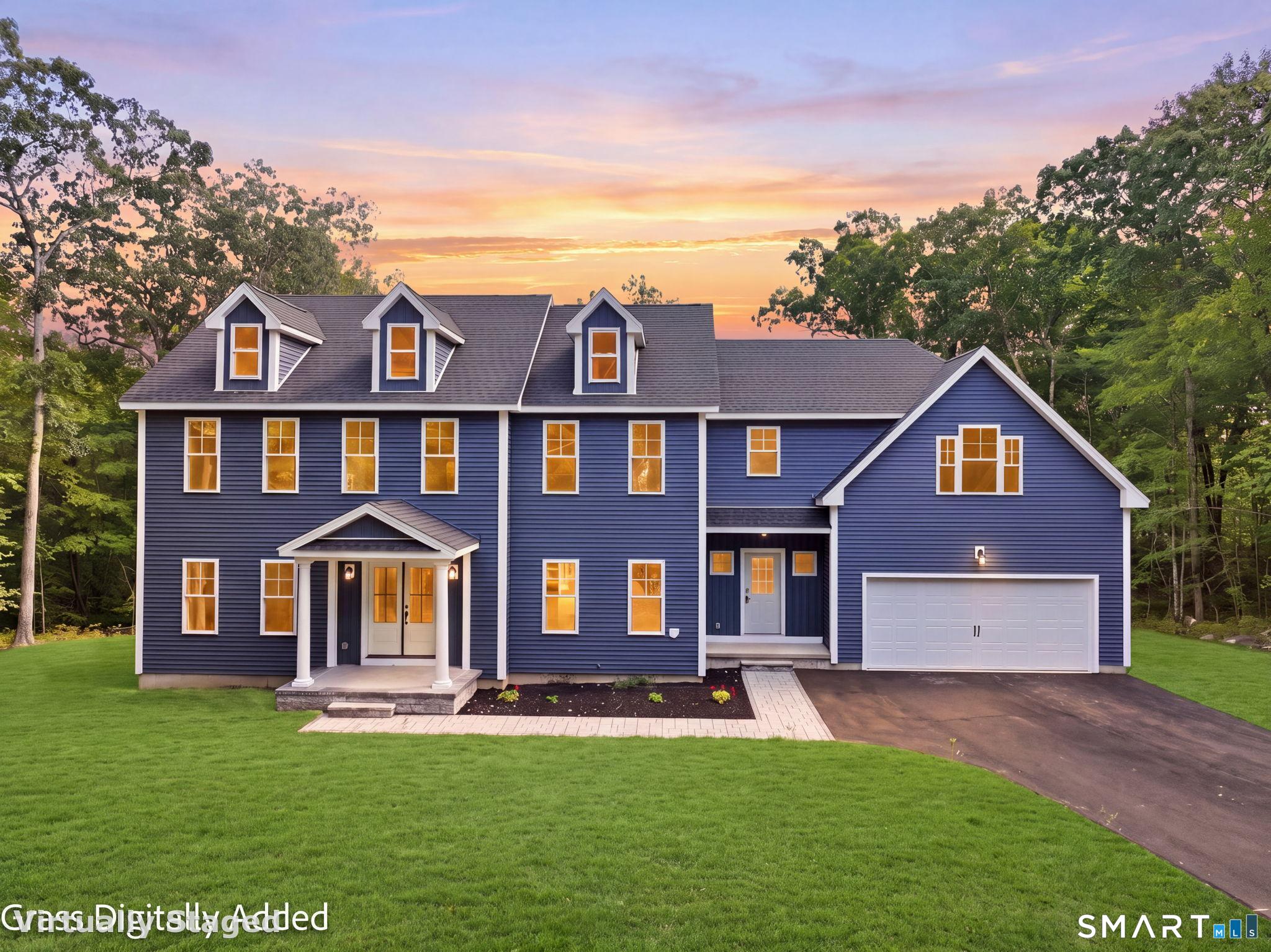
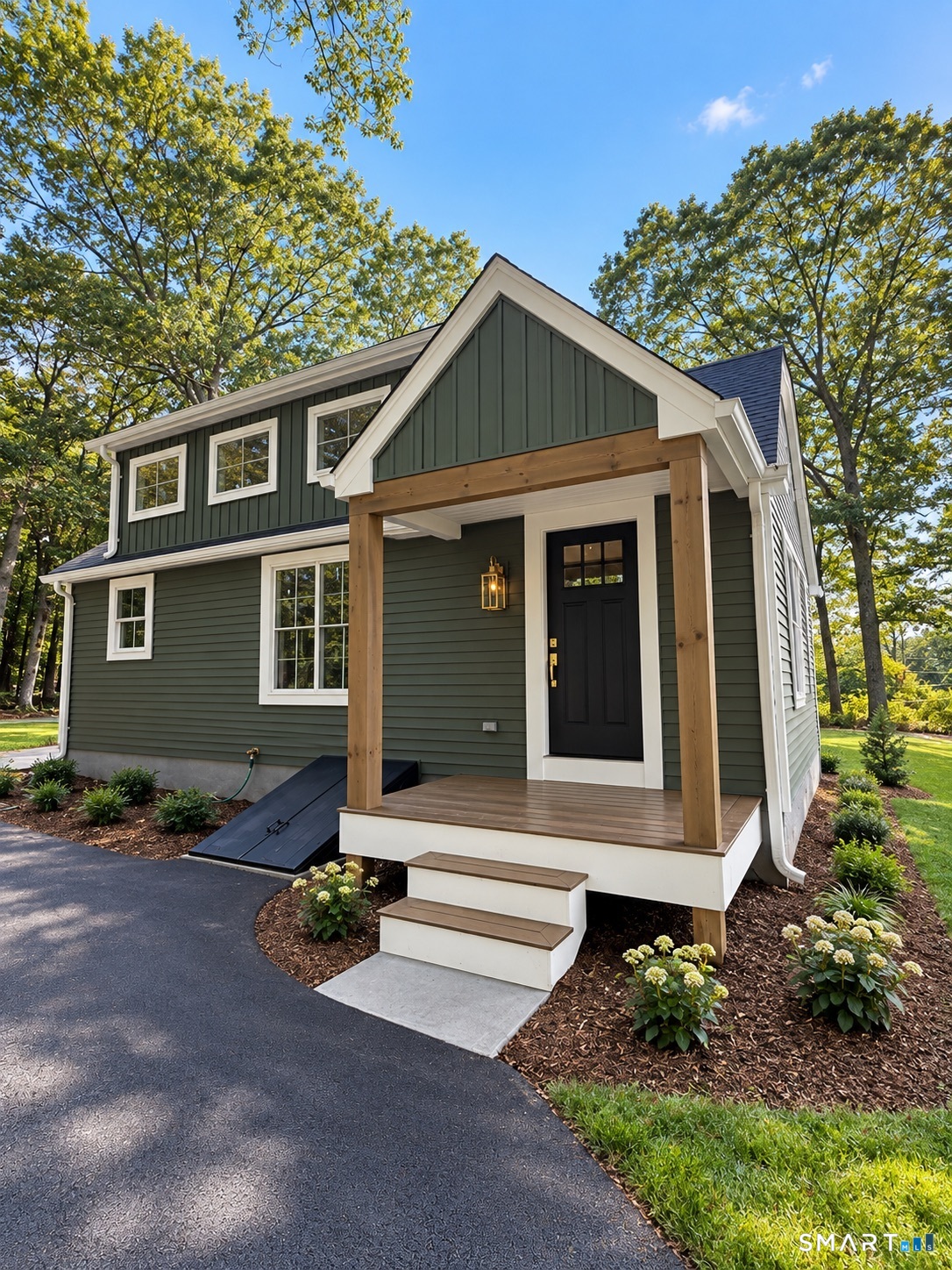
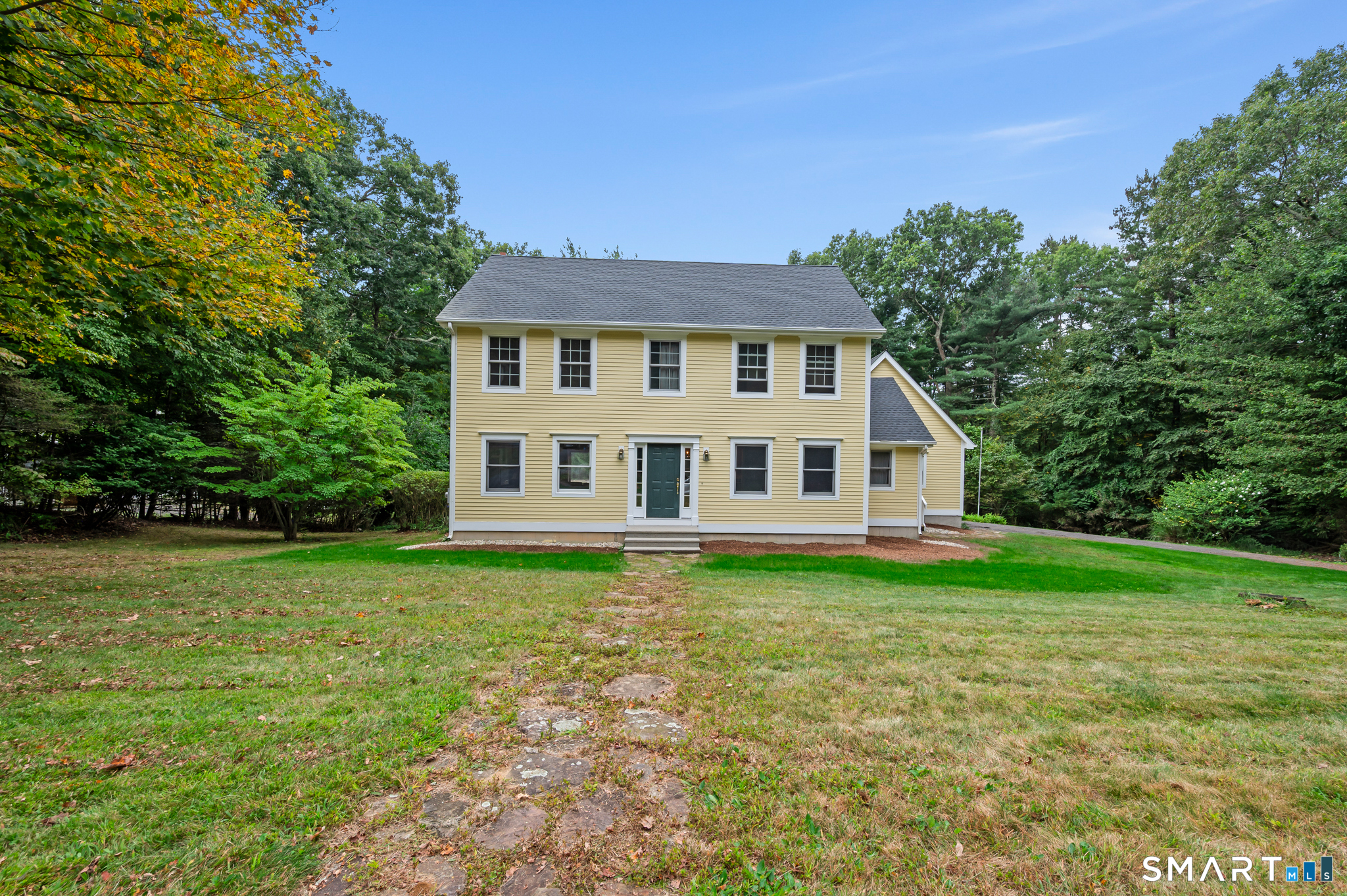
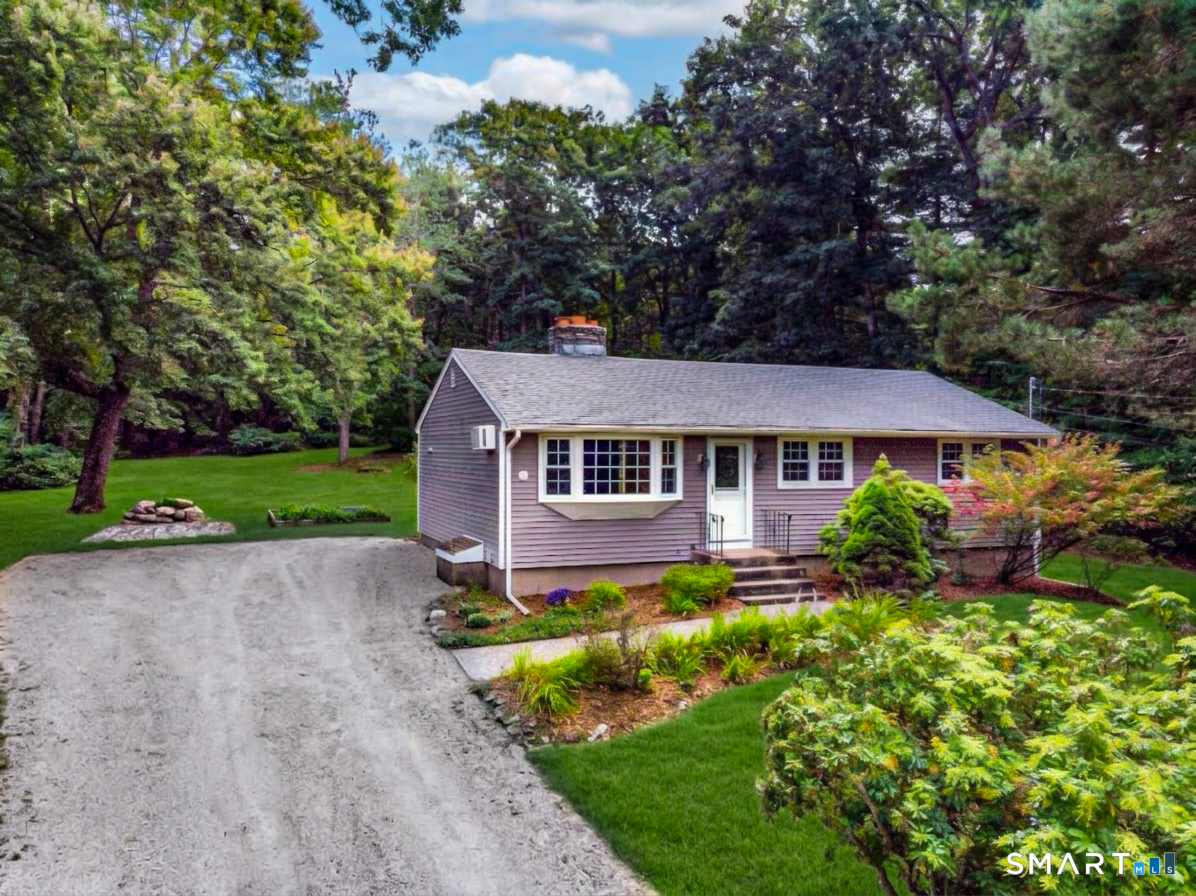
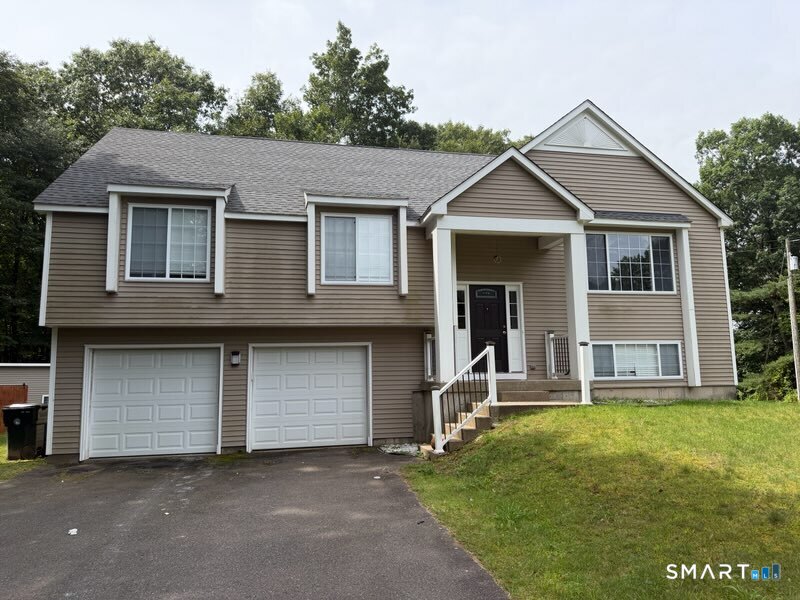
Tolland is the strongest seller's market in Eastern Connecticut, and the reason is sitting right in the zoning regulations. One residential zone. A two-acre minimum lot, 200 feet of required frontage, five acres if it's a rear lot. Single-family homes sold at a median of $446,450 in 2025, at 105.2% of asking, in a median of 16 days. You can't manufacture supply here, and the town has decided it doesn't want to.
I sell all over this county, so let me tell you what I'd want to know if I were buying in Tolland.
Metric | 2025 | 2024 |
Median sale price, single-family | $446,450 | $422,500 |
Closed sales | 154 | 146 |
Median days on market | 16 | 17 |
Percent of list price received | 105.2% | 105.0% |
Full calendar year, single-family. Source: SmartMLS, the statewide multiple listing service.
Those numbers are the symptom. Here's what's actually causing them, and you can check every piece of it yourself.
94% of Tolland's housing is single-family and 93% is owner-occupied. There's almost no rental stock here & almost no investor churn. People move in and they stay.
Median household income is about $133,000 — roughly 65% above the Connecticut median. Unemployment ran 2.2% against a statewide 2.7%.
New lots are nearly impossible to create. More on that in the zoning section below.
The town keeps its own kids from kindergarten straight through graduation. Most of its neighbors don't.
So you've got high-income owners who aren't going anywhere. A housing stock that can't really grow. And a school district that stands on its own. That's what gets you 105% of list in sixteen days, and I don't see it letting up.
Tolland's Residential Design District is basically the town's only conventional residential zone, and it's strict:
Minimum lot area: two acres. Minimum frontage: 200 feet at the street line. Minimum buildable area: 19,000 square feet containing a 100-foot square. Rear lots: five acres minimum. Two-family dwellings: also two acres.
The town's plan of conservation and development says most of Tolland's land is zoned residential, with only about 4% zoned for business use.
Here's what that means if you're buying. Nobody can flood this town with new houses, which props up what you own. Good news if you're the owner. But if you're buying land, don't assume it's buildable. Frontage, that buildable-area square, and the rear-lot rule all have to work before a lot is really a lot.
There's also an Aquifer Protection Overlay Zone. Parcels inside it pick up extra use restrictions on top of the base zoning. Check the overlay before you assume anything about a piece of land.
One more zoning note if you're looking near the I-84 and Route 195 interchange: the town's own plan says the Tolland Village Area regulations "are not resulting in the development initially envisioned," and recommends reverting to previous zoning or a simplified version. I'd expect a zoning change in that area.
Tolland's FY2026-27 mill rate is 27.78, up from 27.19, an increase of 2.17%. The budget of $66,390,910 passed at referendum on May 19, 2026 by a vote of 1,344 to 1,186. Of that, $46,014,811 is Board of Education operating and $14,632,175 is municipal operating.
And that was the second try. The first vote was May 5, 2026, and the town held more budget meetings before going back out. Tolland budgets often need more than one attempt. Keep an eye on this fall.
Tolland has no special taxing districts. The state registry comes back empty for this town. No fire districts, no lake districts, no service districts. That one rate is your entire property tax bill, and I can't say that about several towns nearby.
The last revaluation was October 1, 2024. If you see the rate drop from 37.77 to 27.19 that year and think the town cut somebody's taxes, it didn't. That was the revaluation resetting assessments. Assessments run at 70% of fair market value. Next revaluation is 2029.
Coming this fall: a $5.5 million high school roof replacement goes to referendum. Buy in Tolland now and you're buying into that decision. Given how often first votes fail here, expect a fight over it.
Tolland runs its own PK–12 district — about 2,144 students across four schools. That's genuinely unusual around here. Ashford, Willington, Bolton and Andover all send their high schoolers to a regional or tuition district. Tolland doesn't.
School | Grades | Enrollment | Address |
Birch Grove Primary | PK–2 | 532 | 247 Rhodes Rd |
Tolland Intermediate | 3–5 | 483 | 96 Old Post Rd |
Tolland Middle | 6–8 | 468 | 1 Falcon Way |
Tolland High School | 9–12 | 639 | 1 Eagle Hill |
Enrollment figures are from the National Center for Education Statistics, 2024-25. The district office is at 51 Tolland Green.
If you're relocating with kids, the thing that matters is continuity. One district, one set of expectations, the same families from kindergarten through twelfth grade. That's a big part of why 93% of the housing here is owner-occupied.
Almost every real estate page in Connecticut gets this wrong, and on the Green getting it wrong costs real money.
Tolland has BOTH a National Register district and a local historic district, and they do completely different things.
The National Register listing came in 1997 (reference #97000832), running roughly along Old Post, Tolland Stage and Cider Mill Roads. That one's an honor. On its own it doesn't require a single thing of a private owner.
The LOCAL historic district was established in 1990, and it has teeth. The Tolland Historic District Commission operates under Connecticut General Statutes Sections 7-147a through 7-147k. The language in the town's own design guidelines is about as clear as it gets:
"No building or structure shall be erected, altered, demolished, or removed within the district until an application for a certificate of appropriateness has been submitted to and approved by the Commission."
What needs a Certificate of Appropriateness: additions, masonry work, signs, solar panels, fences, parking alterations, paint-removal methods, shutters, porches, ornament, and window and door modifications or replacements.
What's exempt: adding or replacing storm windows, and minor surface repairs that swap a damaged part for one of the same geometry and material.
The commission covers more than fifty houses and other buildings. It sits at 21 Tolland Green.
If you're looking at a house on or near the Green, take this seriously. Solar being reviewable matters to a lot of buyers today. So does window replacement, which is usually the first thing people want to do to an older house. Ask the Commission what your specific plan would take before you commit to it.
One more thing: the historic district area carries a state-designated scenic road, proposed by the Commission and approved by the Connecticut DOT in 2018, which limits road alteration and tree removal.
On and around the Green: the Old Tolland County Courthouse at 53 Tolland Green, separately listed on the National Register in 2009; the Old Tolland County Jail and Museum; and the Hicks-Stearns Family Museum. Call the Tolland Historical Society for current hours.
This is the most consequential practical fact about buying in Tolland, and it's easy to miss.
The Town of Tolland Water Department has about 434 service connections, serving roughly 1,251 people. Tolland has approximately 5,400 housing units. Do that math: roughly 92% of Tolland homes are on a private well.
The town's own plan of conservation and development puts it plainly. Tolland is "a community that is primarily reliant on septic systems and private wells."
Two things you'll read elsewhere that I need to correct:
The water utility is municipal, not Connecticut Water. The Town of Tolland Water Department owns and runs it. A Connecticut Water subsidiary supplies the certified operator and compliance monitoring under contract. So "Connecticut Water serves Tolland" isn't accurate.
And there isn't one water system. There are four public ones plus about ten private community associations. The main Town system, a separate Torry Road system, the Village at Crystal Springs, and a multi-town regional pipeline are all distinct public systems. Then subdivisions including Baxter Farms, Tolland Summit, Woodland Summit, Country Hills, Eastview Kozley and Valley View get their water from private community associations, a third category with its own governance and its own bills.
So when you ask where the water comes from on a Tolland house, there are three possible answers — municipal system, private community association, or your own well. They're not interchangeable. Nail down which one applies to that specific address, in writing, before you offer.
Well and septic permits go through the Eastern Highlands Health District, not Town Hall. Tolland has no municipal health department.
Sewer is limited, and it gets treated out of town. Tolland's capital plan carries an annual payment of $149,709 through FY2031 toward the Town of Vernon's Water Pollution Control Plant upgrade. Tolland's sewered flow is treated in Vernon, which is why public sewer only exists along the Route 195 and I-84 corridor.
Most towns around here will tell you they're inside the affected radius. Tolland actually counted. The town's plan of conservation and development states: "Approximately 140 crumbling foundations have been identified — that is approximately 2.5% of Tolland's housing stock."
And Tolland grants property tax assessment reductions on affected homes. The town's audited financial statements disclose that a recent grand list increase reflected "27 homes that were receiving an assessment reduction due to crumbling foundations added back to the list". That's 27 homes repaired and put back at full assessed value.
Which hands you a diligence step nobody else is going to mention: ask whether the property currently carries a crumbling-foundation assessment reduction. If it does, two things are true. There's a known, documented foundation defect. And the tax bill you're looking at resets upward once the foundation gets repaired. Both belong in your offer.
The cause is pyrrhotite in concrete aggregate from the former J.J. Mottes Concrete Company in Stafford Springs. Concrete poured from 1983 through 2015 is the at-risk window. Testing is reimbursed — 100% up to $400 for visual inspection and 50% up to $2,000 for core testing — and new claims are accepted until June 30, 2030. Connecticut's Residential Property Condition Report asks every seller straight out whether they know of any professional foundation testing and whether they know of pyrrhotite in a foundation. Read those questions carefully, though. They ask what the seller knows. A seller who never tested answers "no" honestly. A clean disclosure form often just means nobody ever looked.
I've written a full buyer's guide to this issue — how testing actually works, what it costs, what the state assistance program pays and what it doesn't, and the deadline that catches people out. Crumbling Foundations in Connecticut: What Buyers Must Do Before Closing.
Town Hall is closed on Fridays. Hours are Monday, Wednesday and Thursday 8:00 to 4:30, and Tuesday 8:00 a.m. to 7:30 p.m. That covers the Town Clerk, so land records and conveyance tax, plus Building, Assessor and Planning.
A Friday closing can't record in Tolland. If you're scheduling a closing here, that's not a minor detail. It drives your date. The Tuesday evening window is the workaround if you work days and need to pull a permit or search title.
I-84 cuts right through town. The interchange at CT-195, serving Tolland and Mansfield, is being renumbered from Exit 68 to Exit 81 as Connecticut converts I-84 to mileage-based numbering. The neighboring exits change too. CT-74 and US-44 in Willington go from 69 to 84, CT-32 for Stafford Springs from 70 to 85. Signage will be in transition for a while, and older GPS units and listings will keep quoting the old numbers.
Route 195 runs south from Tolland through Storrs to Willimantic. That's the UConn corridor, and it's the part of town where public water and sewer actually exist. Route 74 crosses the town toward Willington and Ashford.
Crandall Park is where recreation happens in this town — the Lodge, the Pavilion, an all-weather turf field, and Crandall Beach, with the Tolland Recreation Center at 104 Old Post Road. Call Recreation at 860-871-3610 for current pass prices and beach season dates.
Tolland covers about 39.6 to 40.3 square miles, with a 2020 Census population of 14,563 and an estimated 14,752 as of July 2025.
One heads-up if you're researching this town online: Connecticut replaced counties with planning regions as Census statistical geography in 2022, and Tolland now reports under the Capitol Planning Region. "Tolland County" still exists in common usage and for probate purposes, but federal data may be filed under the newer geography.
You're in the best seller's position in the region. 105.2% of list, sixteen days, and a supply of competing houses that's structurally capped.
Three things I'd want ready before we list.
If the property is in the local historic district, know what the Commission will and won't allow. A buyer who wants to add solar or replace windows is going to ask, and an informed answer keeps the deal together.
Know your water source and dig out the well records. Ninety-two percent of this town is on a well, and a recent water test plus pump documentation kills the most common late-stage objection in a Tolland sale.
If the house was poured between 1983 and 2015, test the foundation before we go to market. Buyers here are unusually well informed on this, because the town publishes its own numbers. Meeting that question with a test result instead of a shrug is worth real dollars.
If you want a real number on your house, call me. I'll walk the property, pull the actual comps, and tell you honestly what I think it brings.
And if part of what you're weighing is whether you need me at all — some people genuinely don't, and I'll tell you so — I wrote a straight piece on selling your house without an agent in Connecticut. It covers where doing it yourself actually works, what AI is genuinely good at now, and what an automated price still misses even somewhere that trades as often as Tolland.
Single-family homes in Tolland sold at a median of $446,450 in 2025, up from $422,500 in 2024, across 154 sales. They went at 105.2% of list price in a median of 16 days, the strongest seller's market of any town I cover on this site. Source: SmartMLS.
27.78 for FY2026-27, up 2.17% from 27.19. The $66,390,910 budget passed at referendum May 19, 2026 by 1,344 to 1,186. Tolland has no special taxing districts, so that single rate is your entire property tax bill. The last revaluation was October 1, 2024, and the next one is 2029.
Two acres in the Residential Design District, which is effectively the town's only conventional residential zone. You also need 200 feet of frontage at the street line and a buildable area of 19,000 square feet containing a 100-foot square. Rear lots require five acres. An Aquifer Protection Overlay adds further restrictions on some parcels.
Yes. Tolland High School at 1 Eagle Hill, grades 9–12, about 639 students. Tolland runs its own PK–12 district of four schools with about 2,144 students, unlike several neighboring towns that send their high schoolers to a regional district.
Mostly no. The Town of Tolland Water Department has about 434 service connections against roughly 5,400 housing units, so about 92% of homes are on private wells. There are also several private community water associations serving individual subdivisions. Figure out which of the three — municipal, community association, or private well — serves a specific address before you buy. Well and septic permits go through the Eastern Highlands Health District.
Not without approval. Tolland's local historic district, established in 1990, requires a Certificate of Appropriateness before any building in the district is erected, altered, demolished or removed, and solar panels are expressly among the reviewable items, along with windows, doors, porches, fences and signs. That's separate from the 1997 National Register listing, which imposes no such restriction. Contact the Historic District Commission at 21 Tolland Green before you plan any work.
Yes, and the town publishes the figure: approximately 140 identified crumbling foundations, about 2.5% of Tolland's housing stock. Affected owners can get a property tax assessment reduction, so ask whether a specific property currently carries one. Concrete poured from 1983 through 2015 is the at-risk window, testing is reimbursed, and CFSIC accepts new claims until June 30, 2030.
Monday, Wednesday and Thursday 8:00 to 4:30, and Tuesday 8:00 a.m. to 7:30 p.m. Town Hall is closed Fridays, which means a Friday closing can't record in Tolland. Plan your closing date around it.
Tolland borders 4 of the other towns I cover, and people looking here almost always look at a couple of them too. Same guide, same numbers, for each one:
Or see how every town in the county compares side by side in my Tolland County real estate guide.
Sources and dates. Sale price, closed sales, days on market and percent of list received: SmartMLS local market update, full-year 2025 and 2024, single-family. Mill rate, budget amount and referendum result: Town of Tolland Finance Department, May 19, 2026 referendum. Special taxing district registry and revaluation cycle: Connecticut Office of Policy and Management. Zoning requirements: Town of Tolland Zoning Regulations, March 25, 2026. School enrollment: National Center for Education Statistics, 2024-25. Historic district authority and design guidelines: Town of Tolland Historic District Commission and Connecticut General Statutes Sections 7-147a through 7-147k; National Register listing 1997, reference 97000832. Water system connections: U.S. EPA Safe Drinking Water Information System, PWSID CT1423011. Housing units and reliance on wells and septic: Town of Tolland Plan of Conservation and Development. Crumbling foundation counts and assessment reductions: Town of Tolland Plan of Conservation and Development and Annual Comprehensive Financial Report. Capital plan items: Town of Tolland capital budget presentation. Income, ownership rate and unemployment: U.S. Census and Town of Tolland ACFR. Exit renumbering: Connecticut Department of Transportation. Town Hall hours: Town of Tolland. Population and area: 2020 U.S. Census and Census population estimates.
Last updated August 2026. Tax rates and market data change — ask me for current numbers.
There's plenty to do around Tolland, including shopping, dining, nightlife, parks, and more. Data provided by Walk Score and Yelp.
Explore popular things to do in the area, including La Mari’s Food Service, Tolland Red & White, and Liquor Wine Discount.
| Name | Category | Distance | Reviews |
Ratings by
Yelp
|
|---|---|---|---|---|
| Dining | 0 miles | 1 review | 5/5 stars | |
| Dining | 0.55 miles | 5 reviews | 2.8/5 stars | |
| Dining | 0.56 miles | 0 reviews | 0/5 stars | |
| Dining · $ | 0.92 miles | 26 reviews | 2.7/5 stars | |
| Dining | 0.95 miles | 3 reviews | 3/5 stars | |
| Dining · $$ | 0.96 miles | 117 reviews | 3.9/5 stars | |
| Dining | 1.28 miles | 7 reviews | 5/5 stars | |
| Dining | 1.4 miles | 69 reviews | 3.8/5 stars | |
| Dining · $$ | 1.41 miles | 449 reviews | 4.4/5 stars | |
| Dining | 1.41 miles | 4 reviews | 3/5 stars | |
| Dining · $$ | 1.42 miles | 35 reviews | 2.6/5 stars | |
| Dining | 1.43 miles | 21 reviews | 3.7/5 stars | |
| Dining | 1.45 miles | 4 reviews | 4/5 stars | |
| Dining | 1.45 miles | 14 reviews | 3.3/5 stars | |
| Dining | 1.45 miles | 0 reviews | 0/5 stars | |
| Dining | 1.47 miles | 0 reviews | 0/5 stars | |
| Dining · $$ | 1.48 miles | 50 reviews | 3.6/5 stars | |
| Active | 1.24 miles | 3 reviews | 4.7/5 stars | |
| Nightlife | 0.95 miles | 0 reviews | 0/5 stars | |
| Beauty | 0.64 miles | 14 reviews | 3.3/5 stars | |
| Beauty | 1.42 miles | 50 reviews | 4.1/5 stars | |
| Beauty | 1.43 miles | 3 reviews | 5/5 stars | |
| Beauty | 1.45 miles | 0 reviews | 0/5 stars | |
| Beauty | 1.49 miles | 0 reviews | 0/5 stars | |
|
|
||||
|
|
||||
|
|
||||
|
|
||||
|
|
||||
|
|